All projects
Research Project

Deviancy Aversion

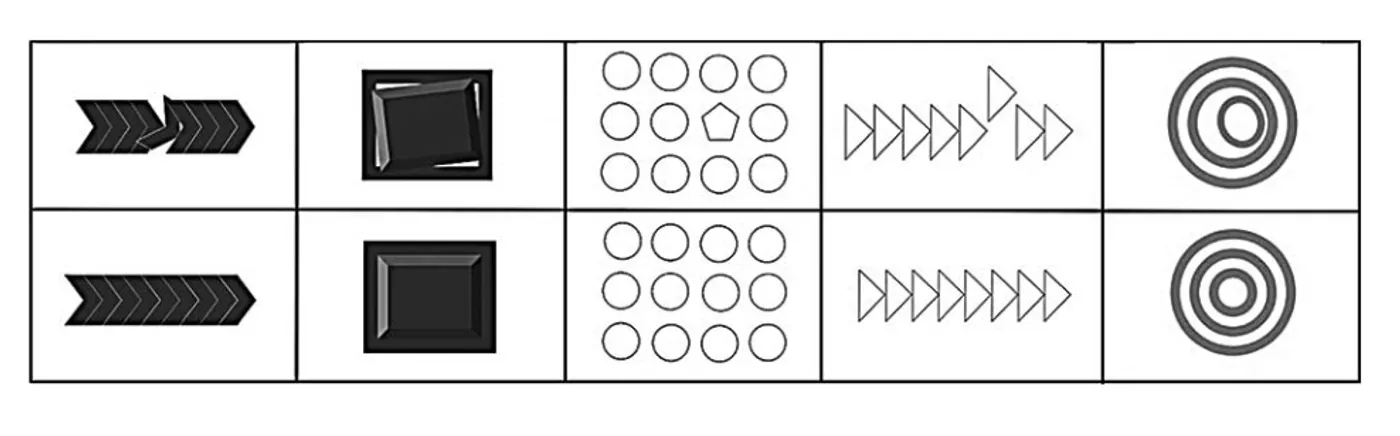
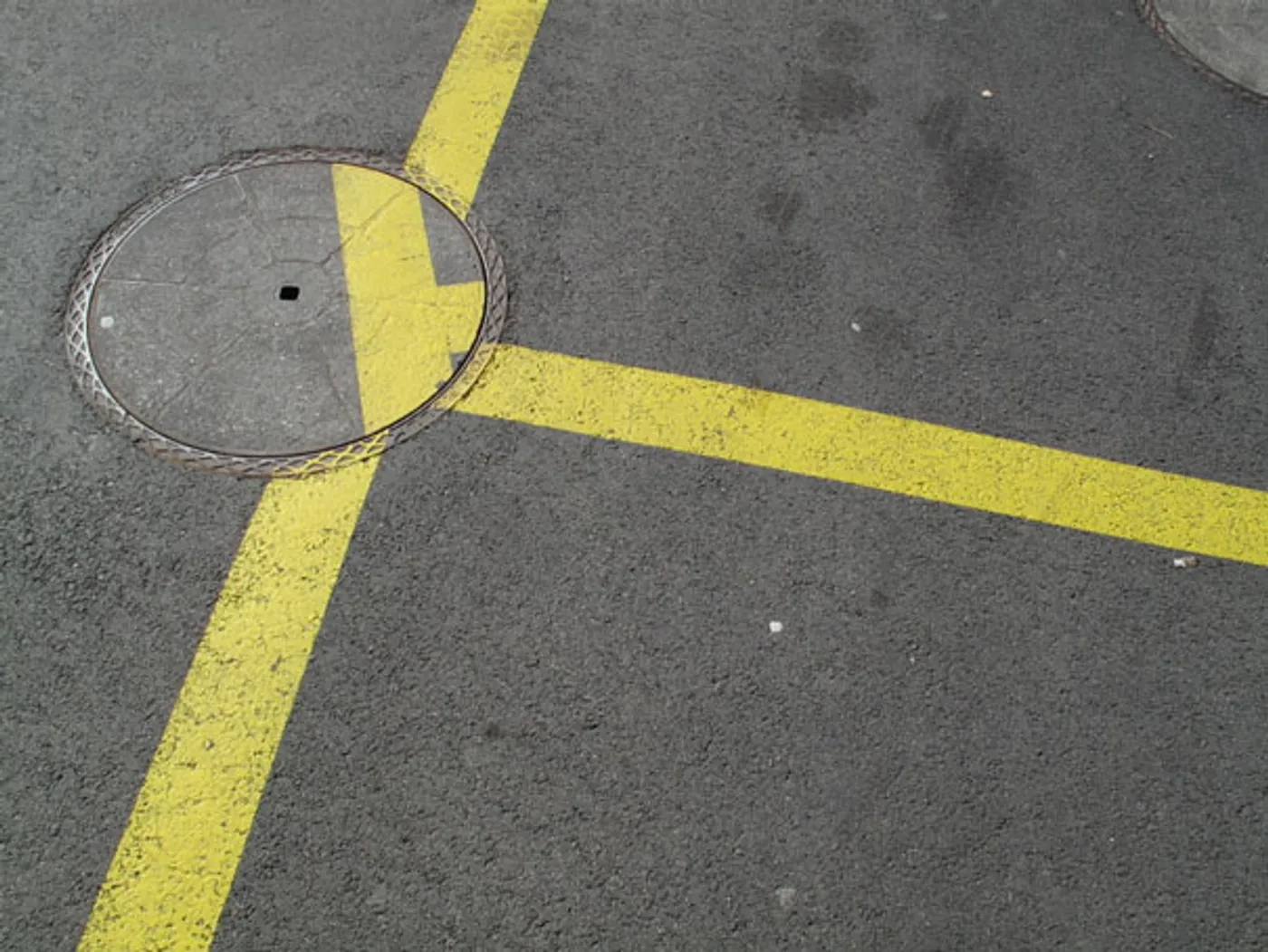
In numerous studies, we have explored people’s negative reactions to deviations or anomalies—their discomfort with irregularities and disruptions in patterns. Our findings suggest that this sensitivity transcends various domains, manifests early in life, is prevalent across different cultures, and significantly influences social judgments and behaviors.

For instance, we discovered a correlation between individuals’ discomfort when encountering disrupted patterns of geometric shapes and their prejudice toward ‘social outliers’. These outliers might include individuals experiencing homelessness or those belonging to a racial minority group.

Interestingly, this connection implies that our basic discomfort toward pattern disruptions can have a profound impact on our social attitudes and behaviors. This basic sensitivity, therefore, seems to be a key player in shaping our interpersonal interactions and perceptions.

Deviancy Aversion project image

Summary video

Relevant Publications

All publications

Personality and Social Psychology Bulletin · 2022

Deviancy Aversion and Social Norms

Gollwitzer, A., Martel, C., Heinecke, A., & Bargh, J. A.

Deviancy aversion, or discomfort with pattern distortions, plays a role in the strength and prevalence of social norms. In five studies with 2,390 participants, higher deviancy aversion predicted negative emotions toward norm violations, increased norm-following behavior, and a heightened emphasis on norms. This effect extended to different tasks and adherence to various norms. Thus, deviancy aversion, as a low-level emotional process, contributes to the promotion and maintenance of social norms.
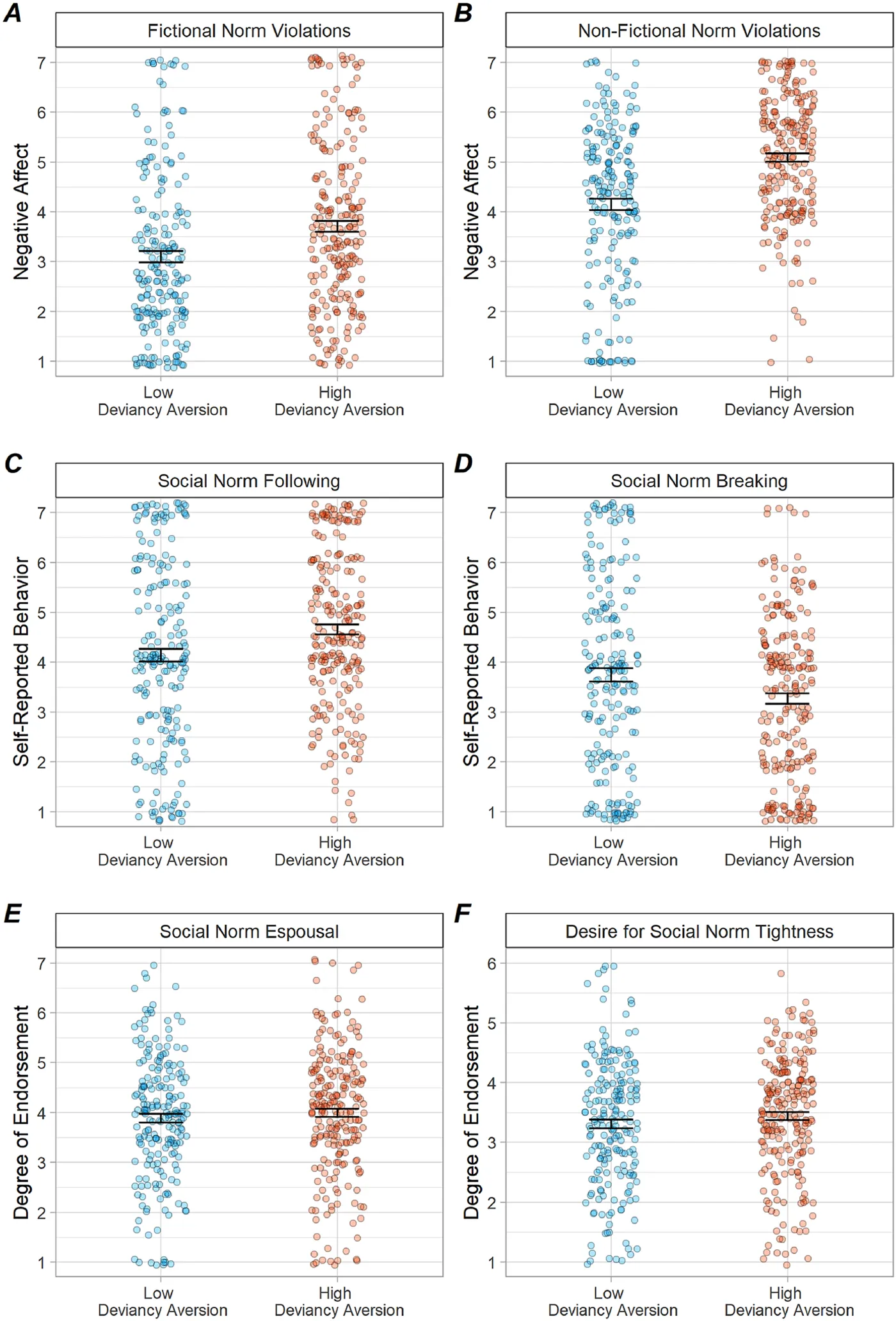
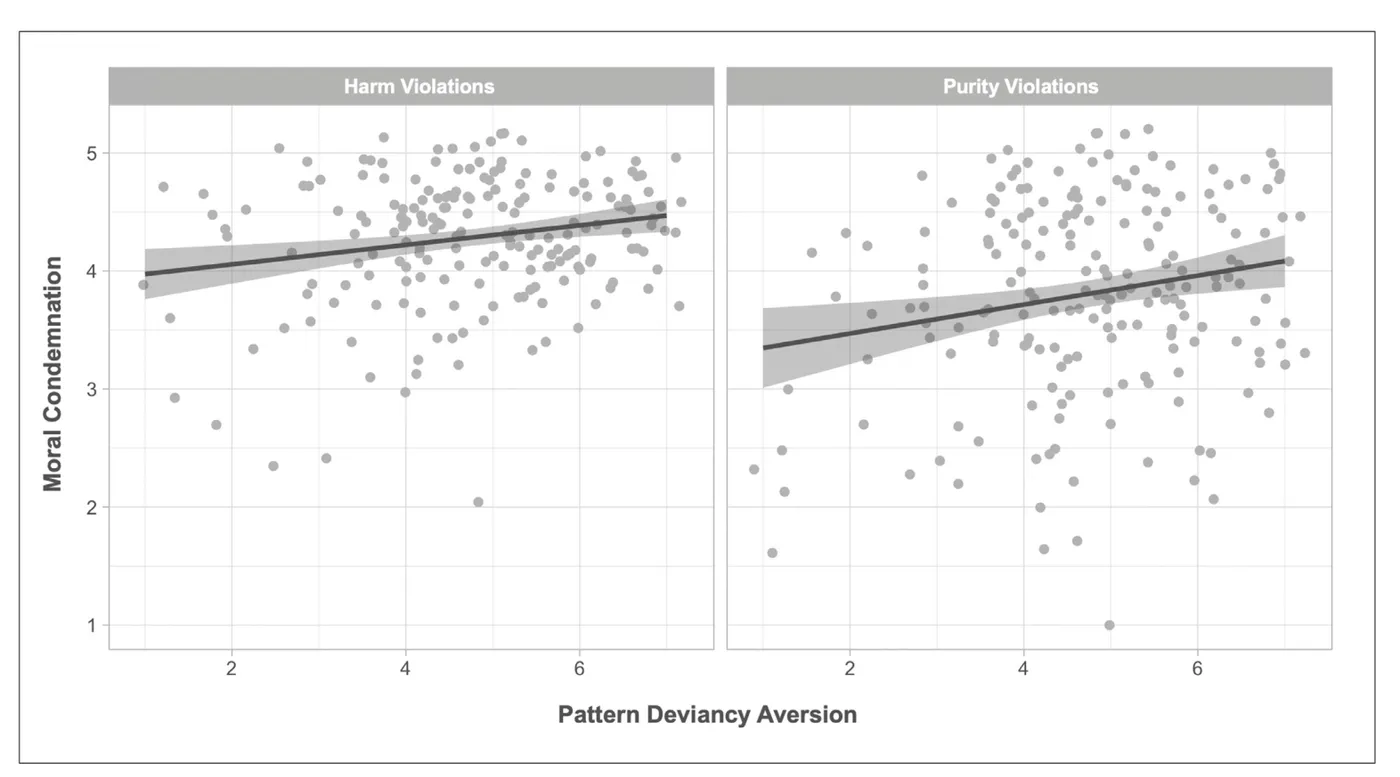
Figure from “Deviancy Aversion and Social Norms”

Personality and Individual Differences · 2020

Aversion towards simple broken patterns predicts moral judgment

Gollwitzer, A., Martel, C., Bargh, J. A. & Chang, S. W. C.

To what extent can general cognitive factors influence moral judgment? We explore the role of people’s aversion to broken patterns in predicting moral sensitivity. We find that participants’ aversion to non-social pattern deviations predicted greater condemnation and punishment of harm and purity violations, particularly for intuitive thinkers. Additionally, pattern deviancy aversion was associated with a greater tolerance for moral violations once these were framed as common in an alternate society. These findings suggest a link between people’s aversion to broken patterns and moral judgment.

Figure from “Aversion towards simple broken patterns predicts moral judgment”

Journal of Experimental Psychology: General · 2020

Pattern deviancy aversion predicts prejudice via a dislike of statistical minorities

Gollwitzer, A., Marshall, J., & Bargh, J. A.

Research has shown a connection between people’s dislike of pattern deviations and their prejudice, but the underlying processes and causality remain unclear. We suggest that aversion to pattern deviations may contribute to prejudice by intensifying people’s dislike for statistical minorities. In nine studies (N=1,821), we found support for this idea, as aversion to pattern deviations related to disliking novel statistical minorities, which in turn predicted prejudice against racial and stigmatized minorities. These findings indicate that people’s aversion to pattern deviations can drive prejudice, particularly toward statistical minorities.

Figure from “Pattern deviancy aversion predicts prejudice via a dislike of statistical minorities”

European Journal of Social Psychology · 2019

Anxious attachment as an antecedent of people’s aversion towards pattern deviancy

Gollwitzer, A., & Clark, M. S.

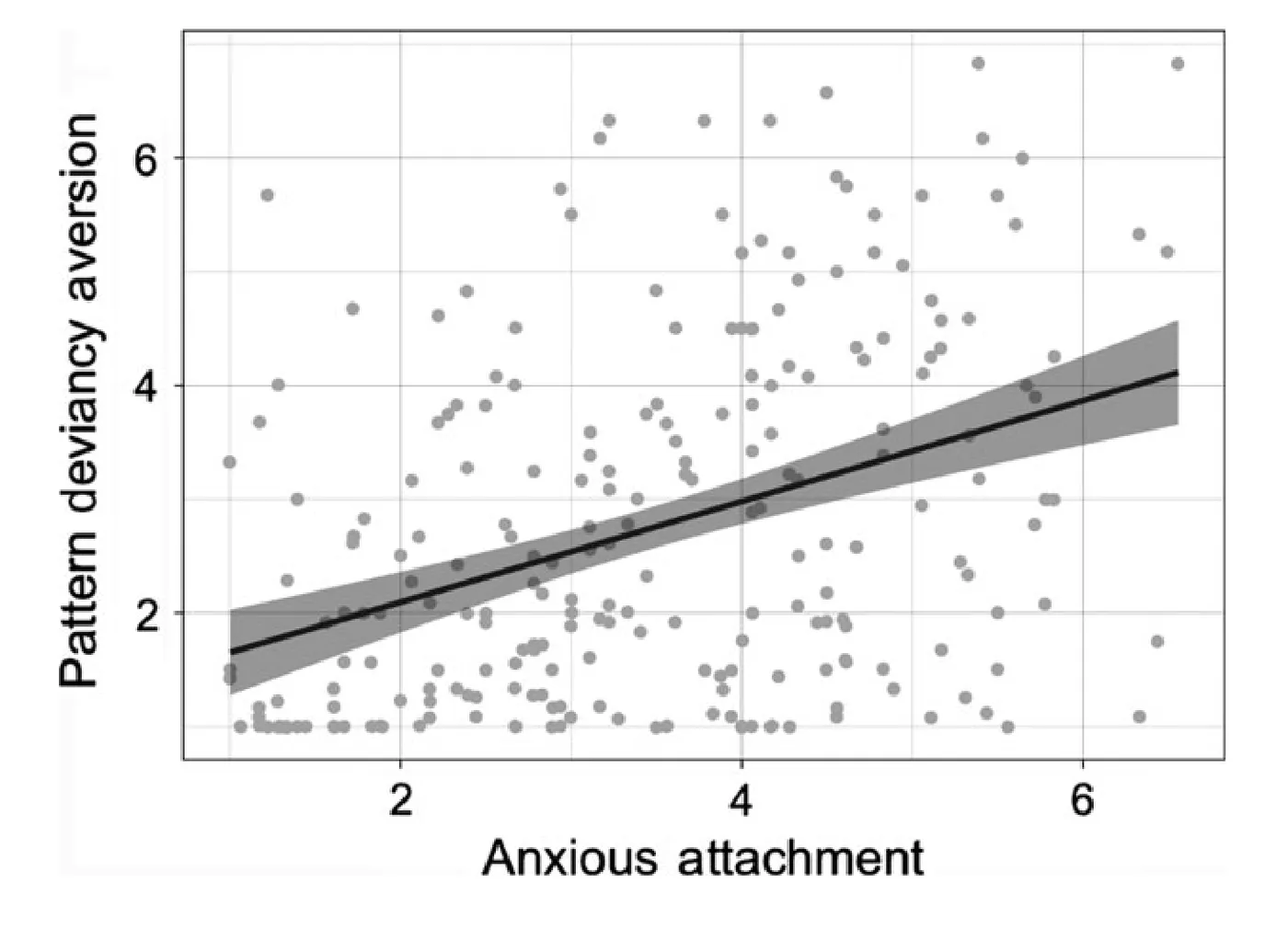
Research suggests that people’s aversion to pattern deviations contributes to social phenomena like prejudice. The factors driving this aversion are unclear, but anxious attachment, characterized by hypersensitivity to social inconsistency, may heighten pattern deviancy aversion. In two studies (N=137 and N=102), anxious attachment predicted aversion to broken patterns. In two additional studies (N=310 and N=470), experimentally inducing anxious attachment increased pattern deviancy aversion. These findings indicate that anxious attachment is a factor in pattern deviancy aversion and suggest its role in certain social phenomena.

Figure from “Anxious attachment as an antecedent of people’s aversion towards pattern deviancy”

Nature Human Behaviour · 2017

Relating pattern deviancy aversion to stigma and prejudice

Gollwitzer, A., Marshall, J., Wang, Y., & Bargh, J. A.

Research conducted across six studies indicates that people’s strong aversion toward non-social pattern deviancy, such as a row of triangles with one out of line, predicts their dislike of social deviancy. This relationship remains consistent across various measures and cultural contexts, displaying a moderate effect size. The findings suggest that aversion to pattern deviancy plays a significant role in shaping stigmatization and prejudice.

Figure from “Relating pattern deviancy aversion to stigma and prejudice”